Thinking about studying overseas but not sure where to start?
Every year, thousands of Bangladeshi students plan to study abroad, and most get stuck at the planning stage. Too many options, too many deadlines, and conflicting advice from Facebook groups and agents does not help.
A study abroad plan does not need to be complicated. It just needs to happen in the right order.
This guide walks through that order, from picking a country to landing on campus, with current 2026 visa and English test requirements.
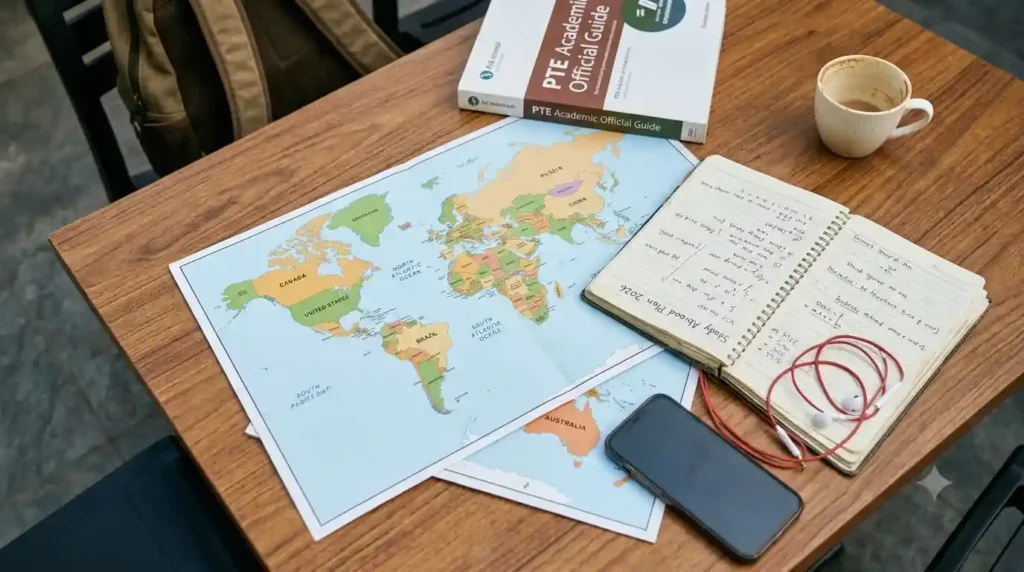
Step 1: Choose Your Destination Country
This decision shapes your budget, your English test target, your visa process, and your part time work rights.
Australia, Canada, the UK, and the USA remain the top choices for Bangladeshi students. Each one suits a different situation.
- Australia offers a strong post study work visa and an established Bangladeshi student community in cities like Melbourne and Sydney.
- Canada is popular for its pathway to permanent residency, though competition for spots at top universities has grown.
- UK degrees are shorter (three years for a bachelor’s, one year for a master’s), which often lowers the total cost despite higher tuition.
- USA has the widest range of universities and scholarships, but the visa process is more document heavy and includes an in person interview.
Choose based on your budget, your career goals after graduation, and how long you are willing to wait for visa processing, not because a relative or friend studied there.
Step 2: Understand the English Proficiency Requirement Early
This is where most students lose time they did not need to lose.
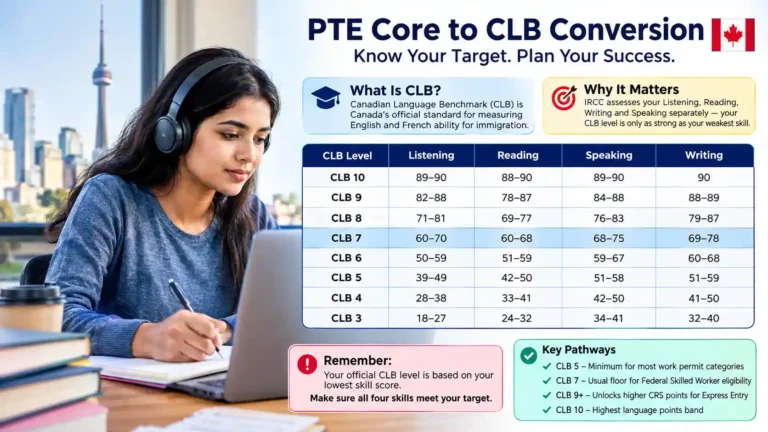
Every destination country requires proof of English proficiency, usually through PTE Academic or IELTS. A common mistake is waiting until after choosing a university to start test preparation. That order should be reversed.
Your test score often decides which universities you can apply to in the first place. A university asking for 79 in PTE is a different shortlist to one asking for 65.
PTE vs IELTS: Which One Should You Sit?
PTE Academic is fully computer based, results typically arrive within 48 hours, and PTE is accepted for Australian and New Zealand student visas, along with thousands of universities worldwide. IELTS is accepted by all four major immigration authorities: Australia, Canada, New Zealand, and the UK.
If you want a faster turnaround and a format that rewards typing and reading speed, PTE tends to suit more students. If you prefer a face to face speaking test and a longer established format, IELTS may be the better fit.
Start this step before finalising your university list, not after. You can compare course options on PTE course pages.
Step 3: Shortlist Universities and Courses
Once you know your destination and rough score range, shortlist four to six universities. Not twenty. Not one.
Check for:
- Course accreditation and industry recognition
- Tuition fees and scholarship availability
- Cost of living in that city (Sydney and Toronto cost far more than smaller regional cities)
- Post study work visa eligibility tied to that specific course
A more affordable university in a smaller city can leave you with more savings and less stress than a well known university in an expensive metro area.
Step 4: Budget for the Full Journey, Not Just Tuition
Tuition gets all the attention, but it is rarely the full cost.
Factor in:
- Application and visa fees
- English test fees (PTE or IELTS)
- Health insurance, mandatory in most countries
- Flights
- Initial accommodation deposit
- Proof of funds required for your visa application
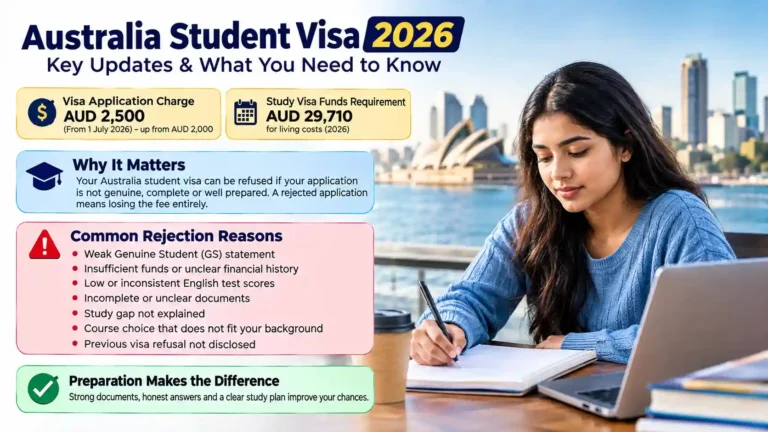
For Australia specifically, the Department of Home Affairs sets a minimum living cost requirement for a Subclass 500 student visa. As of 2026, this sits at AUD 29,710 per year for a single applicant, on top of your first year of tuition and travel costs. This figure is reviewed periodically, so confirm the current amount on the Home Affairs website close to your application date.
Since March 2024, Australia has also replaced the old Genuine Temporary Entrant (GTE) statement with the Genuine Student requirement. Instead of a long personal essay, you answer a set of structured questions about your study intent, your ties to Bangladesh, and how the course fits your career plan.
Bangladeshi applicants currently fall under Australia’s higher document scrutiny tier, alongside a few other South Asian countries. Build in extra time to prepare clean, traceable financial evidence and expect processing to take longer than in previous intakes.
Step 5: Prepare Your Documents Early
Visa officers reject applications for avoidable reasons: incomplete financial documents, inconsistent information across forms, or missing academic transcripts.
Start collecting these alongside your test preparation, not after it:
- Academic transcripts and certificates, attested where required
- Passport valid for the full length of your intended stay
- Bank statements or education loan documents
- Statement of purpose, or Genuine Student responses for Australia
- Offer letter and Confirmation of Enrolment from your university
Step 6: Apply for Your Student Visa
Timelines vary by country, but the pattern holds everywhere: apply as early as your university offer allows. Late applications during peak intake seasons, particularly for Australian and Canadian visas, mean longer processing queues.
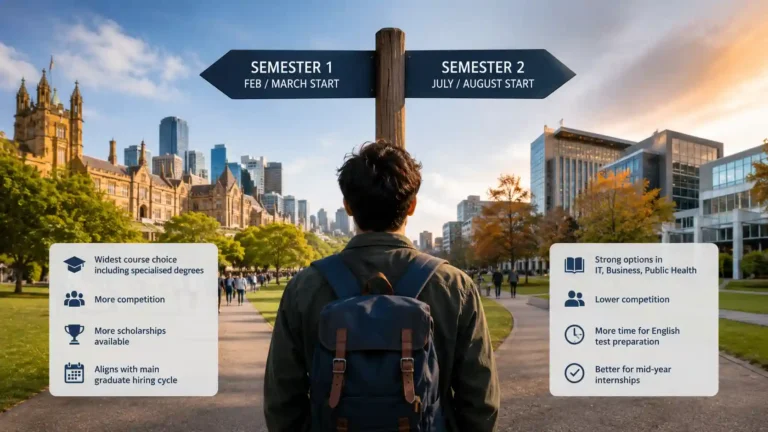
If your intake is February or September, do not start your visa application the month before. Build in a buffer of at least eight to twelve weeks, and check current processing times on the relevant government website before you plan around a specific date.
Step 7: Plan for Departure and Arrival
Once your visa is approved, the practical planning starts: flights, initial accommodation, airport pickup, and orientation dates.
University orientation weeks matter more than they sound, since this is where you set up your student ID, local bank account, and SIM card.
The Bottom Line
A study abroad plan works when the steps happen in order: destination first, English test second, university shortlist third, everything else follows. Skip ahead and you will find yourself fixing gaps under a visa deadline.
If you are at the “which test should I sit” stage, start there. Compare test formats, check current score requirements, and build a study timeline around your intake date, not your visa deadline.
Frequently Asked Questions
Is PTE or IELTS better for an Australian student visa?
Both are accepted for Australian student visas. PTE Academic is computer based with results in about 48 hours. IELTS also offers a computer delivered option, with results usually in one to two days. The right choice depends on your comfort with typing versus handwriting and how quickly you need your score.
How much money do I need to show for an Australian student visa in 2026?
You need to show at least AUD 29,710 for living costs, plus your first year of tuition and travel costs. This figure is set by the Department of Home Affairs and reviewed periodically, so confirm the current amount before you apply.
What replaced the GTE requirement for Australian student visas?
The Genuine Student requirement, introduced on 23 March 2024, replaced the Genuine Temporary Entrant statement. You now answer structured questions in your online application instead of writing a long personal essay.